
Buying a manufactured home is one of the smartest housing decisions you can make in today’s market, but the financing process is different from a traditional mortgage. We sat down with Eric Oaks, a 35-year veteran of manufactured home lending and a longtime partner at Park Lane Finance Solutions, to walk first-time buyers through what to expect, what to bring, and how to set themselves up for success. Learn how to achieve financial success from an industry expert in this one-on-one interview.
To start us off, can you explain how financing a manufactured home is different from a traditional mortgage?
“The beauty of manufactured housing is that at New Durham Estates, the home is considered personal property. It’s a titled instrument. All lenders in our space fall under the umbrella of primary residence financing, but don’t confuse primary residence with a mortgage. They’re not the same thing.
We’re not government-funded. Every lender in this business holds its own paper. We don’t have the same outlets that mortgage lenders do, such as mortgage-backed securities, so our rates tend to run a little higher because the banks hold the note for the long term. We need to project what the markets might look like in 10, 15, 20, and 25 years. That said, the application process itself is much easier than a traditional mortgage. The requirements are leaner, and decisions come fast.”
What should a buyer bring with them when they’re ready to apply?
“Keep it simple. Bring your last two pay stubs, your driver’s license, and know which house you want to buy. That’s really all you need to get started.
Most pay stubs today include your year-to-date earnings, so two pay periods are enough for us to verify your income. The one wrinkle is January, since we’re in a new year. If you’re applying in January, bring the last two pay stubs from the previous year so we have a full year-to-date picture.
If you’re on Social Security, bring your award letters. If you’re self-employed, bring two years of tax returns. Coming in prepared is the single biggest thing a buyer can do to keep the process moving.”
Walk us through what happens after a buyer picks out a home and sits down to apply.
“You’ll sit down with a sales agent at New Durham Estates, and they’ll walk you through the process. You have to complete the application yourself because of regulations, but they’re right there to help. Once the application and purchase agreement are signed and you’ve provided the required documents, New Durham Estates sends it to their pool of lenders, which is where I come in.
We typically have a decision back within about four hours. It’s really fast. Depending on which program you qualify for, whether that’s one of our internal programs or our investor pools, we’ll issue an approval and then start collecting conditions. If everything gets submitted quickly on the buyer’s end, we can close in 10 to 15 days.”
That’s incredibly fast. What tends to slow things down?
“Almost always, the only thing that holds us up is delays in getting conditions back. If a buyer is responsive and gets us what we need, that timeline holds. The more prepared you are when walking in the door, the faster everything moves.”
What does a “real” approval mean at Park Lane?
“When we issue an approval, it’s a real approval. We’re not like some lenders where it’s a quasi-approval that gets walked back later. If you say you’re ready to go, we’re going to close that loan.”
Let’s talk about buyers who don’t get approved on the first pass. What does that look like, and what should they do next?
“It really comes down to the reason for the denial. We’re in the business of making loans, so we’re looking for ways to say yes.
If the issue is the debt ratio, we’ll start asking questions. Is there a co-applicant? Is there someone else who’s going to be living in the home? Sometimes adding a co-applicant brings enough additional income to the deal to clear the federal debt ratio limits, and we can approve the loan that way. We’ve done that many times. Buyers don’t always realize they have that option.
Credit is a different animal. If a recent bankruptcy is the issue, most lenders, including us, are two years out from discharge, so it becomes a waiting game. But for credit issues that aren’t bankruptcy-related, there’s real work a buyer can do on their own.”
What do you recommend buyers do to take charge of their credit before they apply?
“Go to www.annualcreditreport.com. That’s the federal government’s free credit reporting site, and it’s the true assessment of your credit. There are plenty of businesses out there that sell scores and barometers, but that government site is where you should pull from. You can pull one of the four bureaus each quarter. In the Midwest, I recommend TransUnion. It gives you enough information to work with.
Once you’ve pulled your report, look for any credit lines that don’t belong to you or any derogatory items you don’t recognize. You have the right to dispute those. When you dispute a line, the bureau sends it to the creditor, and the creditor has 30 days to respond. If they don’t respond, it’s removed.
There are a lot of credit repair companies out there, but the first thing they do when you sit down with them is dispute everything on your report. You can do that yourself, for free. Then, for the items that remain, see if you can talk to the creditor and make arrangements to get them repaired.”
How early should someone start working on their credit before applying?
“Being wise about your credit is maybe the most important thing any consumer can do in today’s environment. Understand what your score is, and understand what lenders will accept. Park Lane’s program will go down to a 600 score with 10% down. Other lenders may require a 620, 630, or 640. Knowing where you stand and being transparent about it lets the New Durham team match you to a program that fits.
If you’re a year or two out from buying, that’s the time to start. Pull your reports, fix what you can fix, and avoid surprises at closing.”
What kind of rates should buyers expect in today’s market?
“Buyers shouldn’t be shocked by today’s rates. Rates for personal property loans on manufactured homes run higher than traditional mortgages, anywhere from 8.5% to 10.5% or 11%, depending on credit and the age of the home. We finance new and used homes back to 1976.
Higher credit scores get lower rates. A 700 score will get you the best rates available, around 8.5% to 9%. A 600 score will be closer to 11% or 12%. But here’s the most important thing I tell buyers: you’re not marrying the rate, you’re marrying the house. When rates drop, we will refinance you at the better rate. A 1.5% drop makes a huge difference. Don’t pass on a home you love because rates are higher right now than they were three years ago.”
You’ve been in this business for 35 years. What changes have you seen in the industry?
“The biggest change is the homes themselves. Back when I started, long-term money wasn’t really long-term money because you had to project how long the homes would last. Today, these homes are built to last 50 or 60 years. Two-by-six walls, heavy insulation packs, energy-efficient appliances, and systems. Lenders are in love with that because we know the home is going to be there.
That changed our terms. We’re no longer doing 10 and 15-year loans. We’re writing 20 and 25-year loans now, much more comparable to the mortgage market. The product got so good, so fast, in the mid to late 90s, that we had to catch up.”
You mentioned that affordability has become a bigger story in recent years. Why is manufactured housing such a strong fit for that conversation?
“The site-built market priced a lot of people out. Builders can’t make their margins on a $200,000 stick-built home anymore, so they’re building $400,000 to $600,000 homes. With current rates and current incomes, a lot of buyers can’t reach that.
Those buyers are coming to us, and when they walk through these homes, they realize the value. You can buy a brand new multi-section home at New Durham Estates for less than $200,000 with everything any other home has. And in Indiana, the lot rent you pay at New Durham Estates is deductible on your state taxes. Because the home is your primary residence, you can also file for the homestead exemption at the county building, which reduces personal property tax. Indiana is set up well for this.”
What about the build quality conversation? How do manufactured homes compare to site-built homes today?
“Think about it this way. When a stick-built home is going up out in the country, how long does it take? Months. Do you think it never rained on that lumber? Never snowed? Never sat exposed to the elements?
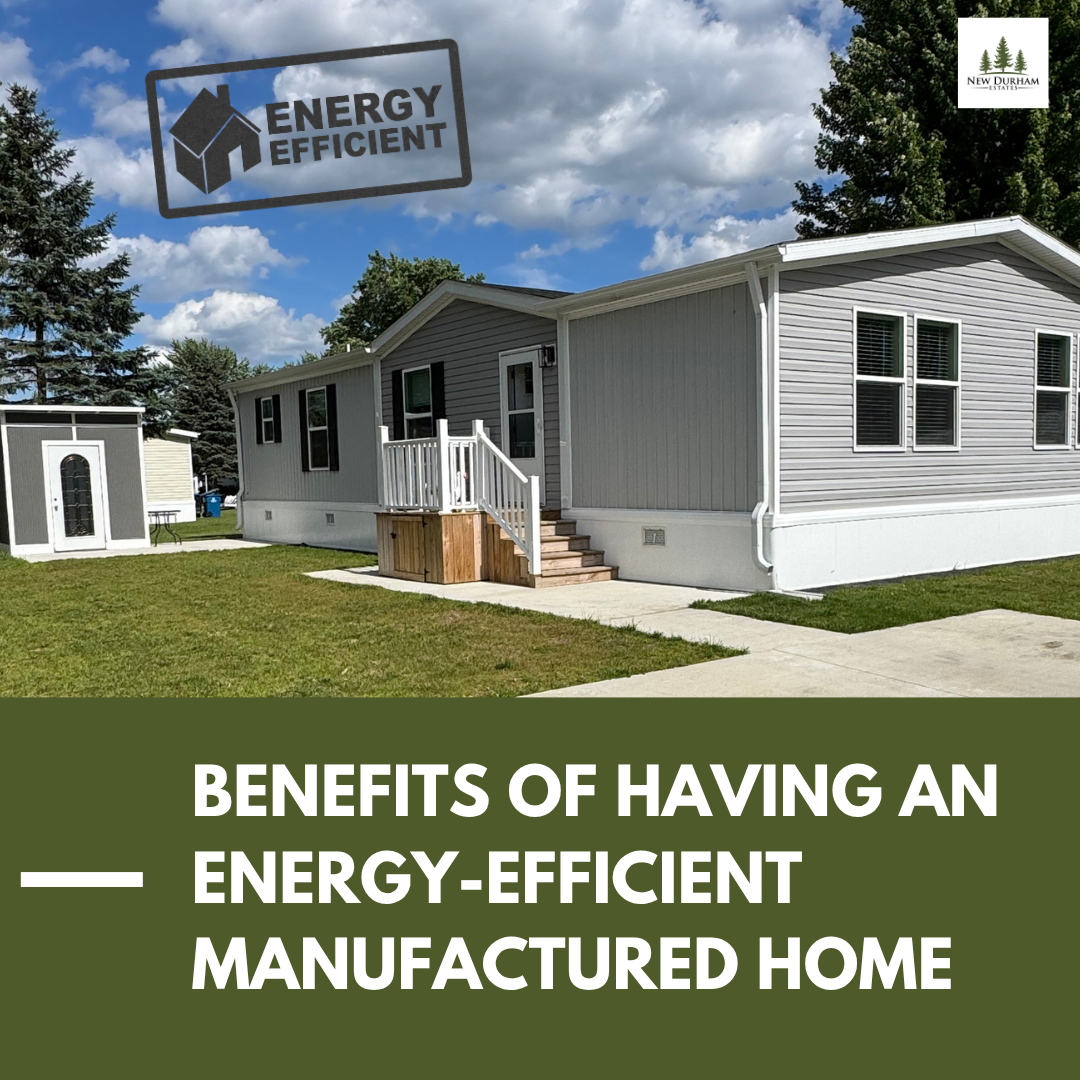
Our homes are built in a factory in about two weeks. The wood, the walls, the floors, none of it is touched by the weather. Combine that with the insulation and energy-efficient systems going into these homes, and you’ve got a smart investment for now and for the long haul. Energy costs are a big piece of total operating costs, and these homes are built to keep that number down.”
Is there anything else you’d want a first-time buyer to know before they sit down to apply?
“Ask enough questions about who you plan to work with. Lenders differ in how you interact with them. Park Lane is a family-owned business. If you need me, you can call me on my phone. I’m one of the few bankers who actually answers the phone, and consumers do call me, and they ask good questions.
You’re going to be with that institution for the next 10, 15, 20 years. Make sure they fit your lifestyle and the way you want to do business. Lenders today offer online applications, QR codes, document uploads, and all of that. Technology has become a big part of this industry. But you should still know who’s on the other end of the relationship. The lender is putting their faith in you, and you’re partnering with the lender. It works best when both sides treat it that way.”
Thank you to Eric Oaks, a senior lender with Park Lane Finance Solutions, a family-owned manufactured home lender, for sharing this information. Eric has been working with the Fath family at New Durham Estates across three generations of ownership.