
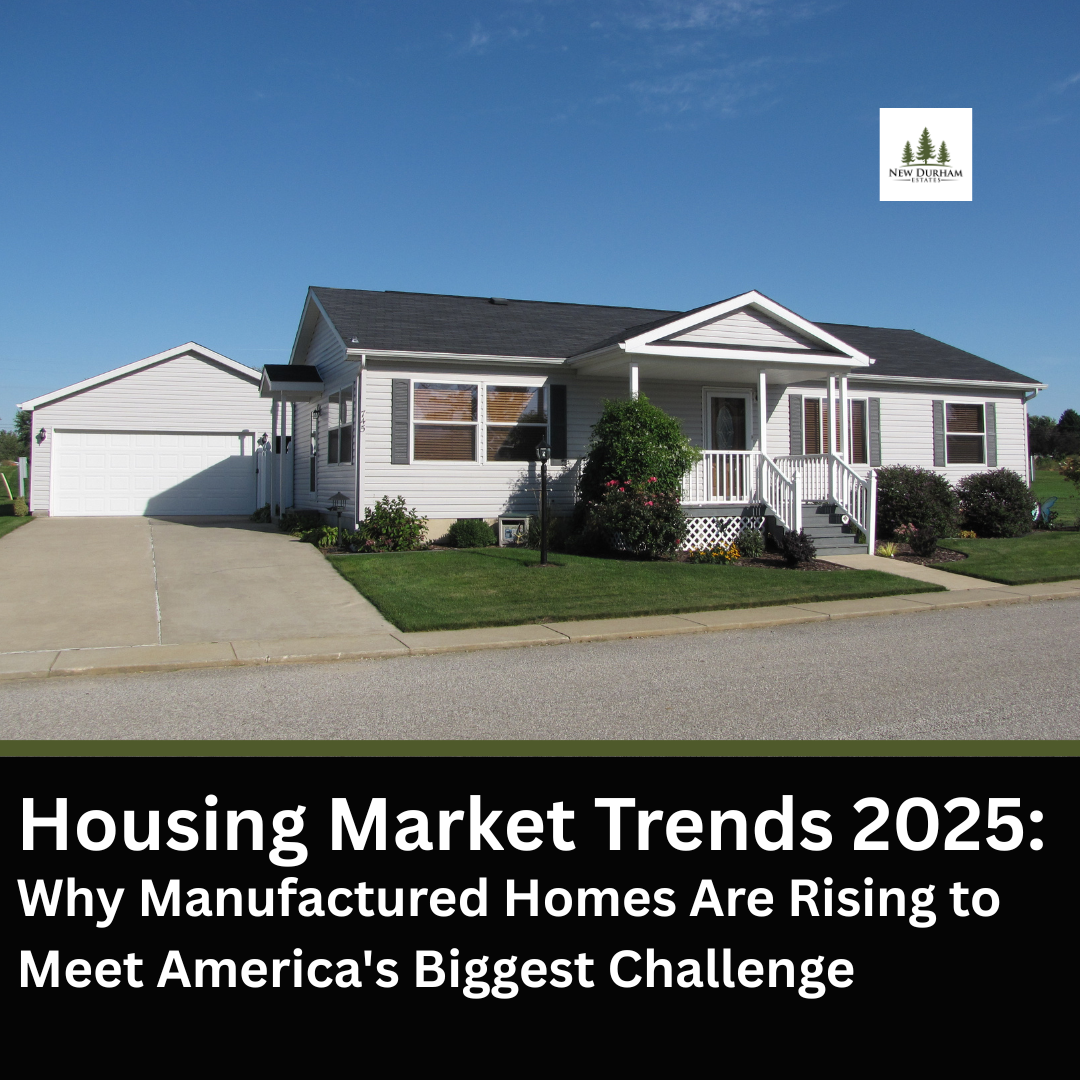
In 2025, the affordable housing crunch turned into a crisis in many communities across the country, including our own. While many housing solutions became out of reach for most Americans, manufactured housing rose in popularity as a sustainable, affordable, and wise investment. Today, we’re looking at housing market trends of 2025 and what we believe 2026 holds.
The Reality of the Housing Crisis
Let’s talk about what’s really happening out there. Almost three-quarters of Americans said housing has grown more unaffordable in their communities in recent years, according to CBS News, and the numbers show this to be true. A homebuyer today needs to earn $121,400 a year to afford a typical home, CBS News reports, meaning their monthly costs would stay below 30% of their income.
Even more alarming, the U.S. has a shortage of 7.1 million affordable, available rental homes for extremely low-income renters, according to the National Low Income Housing Coalition. The average American first-time homebuyer is now 40 years old, according to Fortune, marking a historic shift in when people can actually afford to buy their first home.
For many families, traditional homeownership has moved out of reach.
Manufactured Housing Steps Up
Complicated issues require innovative solutions. While the traditional housing market struggled, manufactured housing production grew significantly over the past year. December production saw an 11.3% year-over-year increase, contributing to an impressive 15.9% growth in year-to-date production, according to the Manufactured Housing Institute (MHI), the national trade association representing the manufactured housing industry.
The overall seasonally adjusted annual rate of shipments reached 103,571 homes, reflecting a 7.3% increase compared to 2023 according to MHI. By mid-2025, that momentum continued. Thirty-eight U.S.-manufactured home builders operating from 152 plants across the country produced 103,314 housing units during 2024, according to the publication MHInsider.
Why the surge? Because people are discovering what we’ve known all along: manufactured homes offer real solutions.
Affordable Does NOT Mean Low Quality
Let’s clear something up right away. When we say “affordable,” we’re not talking about cutting corners or settling for less. Today’s manufactured homes are built to strict standards and offer features that rival traditional homes.
More than 22 million people in the U.S. live in manufactured homes, according to MHI. These aren’t just houses, they’re homes where families build memories, where people put down roots, and where quality of life matters.
The average cost for a new manufactured home in 2024 was $109,400, according to MH Insider, making homeownership possible for families who would otherwise be priced out. But here’s what makes that number even more impressive: the average cost per square foot for a manufactured home is $93.71 MH Insider, compared to over $165 for site-built homes.
What Makes Modern Manufactured Homes Different
Modern manufactured homes come with features you might not expect. Fifty-three percent of manufactured home owners said they purchased their home for its energy efficiency, and 49 percent chose their home for added space, according to MH Insider. These homes are designed with modern living in mind.
The construction process itself has evolved. Because manufactured homes are built in climate-controlled factories, they avoid many of the weather delays and material waste that affect traditional construction. Every home must meet federal standards set by the U.S. Department of Housing and Urban Development (HUD) to ensure safety and quality.
Looking Ahead to 2026
So, what does 2026 hold for the housing market? The housing affordability crisis isn’t going away overnight. Income growth is expected to outpace home-price growth for a prolonged period for the first time since the Great Recession, according to Fortune and real estate analysts. That’s good news, but it’s not enough to solve the problem.
Mortgage rates are expected to be in the low 6% range in 2026, down from the 2025 average of 6.6% according to Fortune, which should help some buyers. However, traditional home prices are expected to increase by only about 1%, which could improve affordability slowly.
This is where manufactured housing really shines. While traditional housing inches toward affordability, manufactured homes are already there. They’re not a temporary fix or a compromise; they’re an innovative housing solution that’s been gaining recognition as a permanent answer to America’s housing challenges.
Why This Matters to Our Community
As a manufactured home community, we’re proud to be part of the solution. Every family that moves into our community is choosing quality, affordability, and a real sense of belonging.
The growth in manufactured housing production isn’t just about numbers; it’s about families finding homes they can actually afford without sacrificing quality. It’s about communities like ours offering a lifestyle that works for real people with real budgets.
The Bottom Line
The housing crisis of 2025 has forced Americans to rethink what homeownership looks like. Manufactured housing has risen to meet this challenge not by offering less, but by offering more innovative solutions at a reasonable price point. As we move into 2026, we expect this trend to continue.
If you’re looking for a smarter way to own a quality home, manufactured housing might be the answer you’ve been looking for. The industry’s growth numbers tell the story: more Americans are discovering that affordable can also mean excellent.
Sources:
- CBS News – America’s deepening affordability crisis summed up in 5 charts
- National Low Income Housing Coalition – The GAP Report
- Manufactured Housing Institute – MHI Economic Report: Production and Shipments See Strong Year-End Finish
- MHInsider – Manufactured Housing Industry Trends & Statistics
- Fortune – The ‘Great Housing Reset’ is coming: Income growth will outpace home-price growth in 2026
- Fortune – The housing affordability crisis is so bad that the average American first-time homebuyer is 40 years old