Rising energy costs have been on the radar for a while, but the conversation seems especially poignant at the moment. You might be asking what high energy costs and manufactured housing have in common, a lot actually. An energy-efficient manufactured home might be the best investment you ever make,
We often find that there’s a version of manufactured housing that exists in people’s imaginations, and then there’s the version being built today. The gap between those two things has never been wider, and had the ability to save more money.
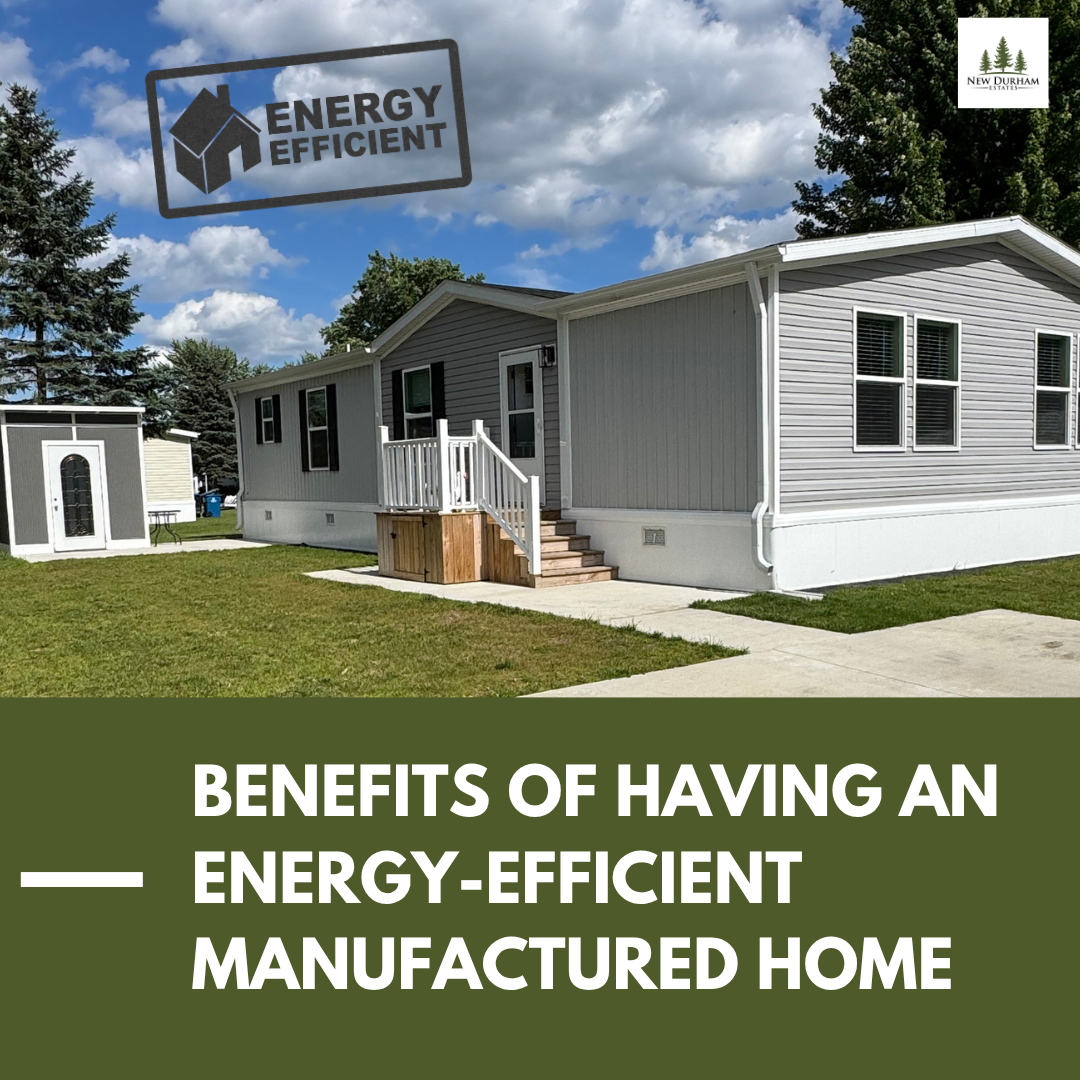
Modern manufactured homes are engineered to meet some of the most rigorous energy efficiency standards in residential construction. Many carry the Energy Star certification, a distinction that requires meeting, and often exceeding, the energy performance benchmarks that govern site-built homes. And when it comes to real-world savings, the numbers tell a story worth hearing.
What Energy Star Actually Requires
Energy Star certification isn’t a sticker that gets handed out. Manufactured homes must comply with the U.S. Department of Energy’s Manufactured Home Construction and Safety Standards (HUD Code), as well as a separate, more demanding set of performance standards established by the EPA. Simply put, to earn the label, a manufactured home must meet or exceed thermal envelope standards (insulation, air sealing, windows, and doors) that reduce heat transfer and drafts, include high-efficiency heating and cooling equipment, use Energy Star-certified appliances and lighting, and pass third-party inspection and testing before certification is granted.
One simply can’t claim to have achieved this Energy Start status; an independent verifier confirms the home performs as designed. The same level of third-party oversight is not universally required in site-built residential construction.
The Factory Built Advantage
One overlooked reason manufactured homes can outperform traditionally built homes in energy efficiency is how they’re built.
Factory construction eliminates the variables that plague site-built homes. There’s no framing crew rushing to close in before rain, no insulation installed in cold temperatures and pulled tight instead of properly fitted, and no on-site substitutions made because a shipment didn’t arrive. Materials are stored in climate-controlled warehouses. Every stage of construction is supervised, documented, and held to the same production standards across all homes in that facility.
Air sealing, one of the most significant contributors to energy loss in any home, is dramatically more precise in a controlled factory environment. A home built in a factory and then transported to a site arrives with its envelope already intact. Contrast that with a site-built home, where the envelope is assembled piece by piece over weeks, often by different subcontractors, in varying weather conditions.
The result is a tighter home, built more consistently, every time. This consistency brings savings.
The Real Savings: What Homeowners Report
Energy Star manufactured homes are designed to be approximately 10–30% more energy efficient than homes built to the standard HUD Code. This translates to lower monthly utility bills. According to Next Step, Energy Star-certified manufactured homes save homeowners 30–50% on monthly utility costs compared to non-certified homes. With heating and cooling accounting for roughly half of the average household’s annual energy bill, that translates to real, measurable savings every single month.
More consistent comfort. Energy efficiency isn’t just about cost; it’s about how a home feels to live in. Proper insulation and air sealing mean fewer drafts, fewer cold floors in winter, and fewer rooms that won’t cool down in summer. The home maintains a more even temperature, with less work for the HVAC system.
Reduced wear on mechanical systems. When a home is well-sealed and properly insulated, the furnace and air conditioner run fewer cycles to maintain the temperature. Fewer cycles mean less wear, longer equipment life, and lower maintenance costs over time.
Environmental impact. Less energy consumed means a smaller carbon footprint. For residents who want their housing choices to reflect their values, an Energy Star home is a meaningful step.
Comparing Apples to Apples
Critics of manufactured housing sometimes point to energy efficiency as a weakness. That comparison often relies on outdated data, pre-HUD Code reforms, or pre-Energy Star adoption, and it doesn’t account for the wide variation in quality among site-built homes.
Here’s what a more honest comparison looks like:
A brand-new Energy Star-certified manufactured home, built to current standards with modern insulation, low-E windows, and high-efficiency systems, will outperform a 1970s ranch built to the codes of that era. It will also outperform many tract homes built in the 1990s and 2000s, when energy codes were less stringent, and builder margins drove decisions about insulation levels and window quality.
What to Look for When You’re Choosing a Home
Not every manufactured home carries Energy Star certification, and not every seller will lead with those details. When you’re evaluating a home, here’s what to ask:
Is this home Energy Star certified? Ask for documentation. A certified home will have verifiable records from the third-party inspector.
What’s the insulation rating? Look for the thermal zone designation, which indicates the insulation package the home was built to. Higher thermal zones mean more insulation, which is appropriate for colder climates and helps protect your utility bills year-round.
What HVAC system is included? A high-SEER-rated air conditioner and a high-AFUE-rated furnace make a measurable difference. Ask for ratings on both.
What are the windows rated? Low-E coated, double-pane windows significantly reduce heat gain in summer and heat loss in winter. This is a standard feature in Energy Star homes, but worth confirming.
Are appliances Energy Star certified? Refrigerators, dishwashers, and washers add up. Certified appliances reduce your load and your bill.
Where the Buck Stops
Manufactured housing has earned a place at the table in the conversation about smart, efficient homeownership, not in spite of the Energy Star standard, but in part because the industry has embraced it so seriously.
When you choose an Energy Star-certified manufactured home, you’re not settling for less. You’re choosing a home that was built with precision, inspected by a third party, and designed to perform, for your comfort, your budget, and the long term.
That’s not a compromise. That’s a smart decision.
Interested in learning more about available homes at New Durham Estates? Contact us today to schedule a tour and see our current inventory.